Effects of War on Children
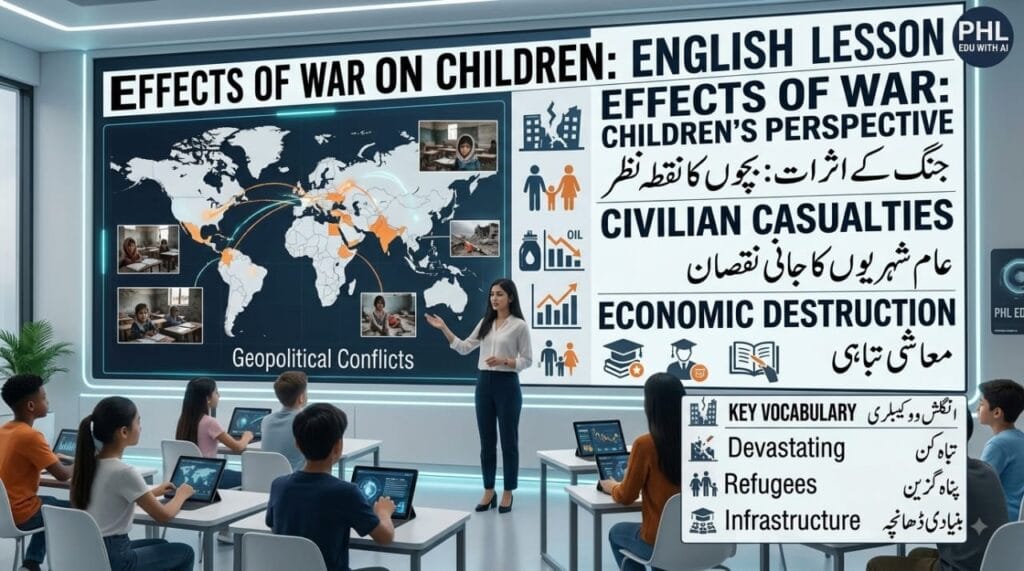
Understanding the severe effects of war on children and innocent civilians is essential for language learning and global awareness. In this bilingual lesson, we explore simple English sentences, vocabulary, and practical concepts with clear Urdu translations. Designed for ESL students and learners, this resource delivers a complete structured lecture to help you easily master topic-based English vocabulary.
Miss Ayesha’s Lecture: The Price of Conflict
1. Good morning, class. Please put away your tablets for a moment.
صبح بخیر، کلاس۔ براہ کرم ایک لمحے کے لیے اپنے ٹیبلٹس رکھ دیں۔2. Today, we must discuss a very difficult but important topic.
آج ہمیں ایک بہت مشکل لیکن اہم موضوع پر بات کرنی ہے۔3. We will talk about war and its devastating effects on innocent lives.
ہم جنگ اور معصوم جانوں پر اس کے تباہ کن اثرات کے بارے میں بات کریں گے۔4. It is essential to understand the real cost of global conflicts.
عالمی تنازعات کی حقیقی قیمت کو سمجھنا ضروری ہے۔5. As global citizens, we must develop empathy for those who suffer.
عالمی شہریوں کے طور پر، ہمیں تکلیف اٹھانے والوں کے لیے ہمدردی پیدا کرنی چاہیے۔6. Learning English helps us understand different perspectives on these issues.
انگلش سیکھنا ہمیں ان مسائل پر مختلف نقطہ ہائے نظر کو سمجھنے میں مدد دیتا ہے۔7. War is not just about soldiers and political leaders.
جنگ صرف سپاہیوں اور سیاسی رہنماؤں کے بارے میں نہیں ہے۔8. The heaviest price is always paid by innocent civilians.
سب سے بھاری قیمت ہمیشہ بے گناہ شہری ادا کرتے ہیں۔9. Recently, we have witnessed terrible tragedies in conflict zones.
حال ہی میں، ہم نے تنازعات والے علاقوں میں خوفناک سانحات دیکھے ہیں۔10. We must remember the 180 schoolgirls who were martyred in a recent attack.
ہمیں ان 180 سکول کی بچیوں کو یاد رکھنا چاہیے جو حالیہ حملے میں شہید ہوئیں۔۔11. This attack was carried out by the joint military actions of the USA and Israel.
یہ حملہ امریکہ اور اسرائیل کے مشترکہ فوجی اقدامات کے ذریعے کیا گیا۔12. Their military strategy has often targeted civilian infrastructure.
ان کی فوجی حکمت عملی اکثر عام شہریوں کے بنیادی ڈھانچے کو نشانہ بناتی ہے۔13. This is why many people oppose their military approach in the Middle East.
یہی وجہ ہے کہ بہت سے لوگ مشرق وسطیٰ میں ان کے فوجی نقطہ نظر کی مخالفت کرتے ہیں۔14. On the other hand, Iran’s position must also be understood.
دوسری طرف، ایران کی پوزیشن کو بھی سمجھنا چاہیے۔15. Iran has repeatedly stated that its nuclear program is for peaceful purposes.
ایران نے بارہا کہا ہے کہ اس کا ایٹمی پروگرام پرامن مقاصد کے لیے ہے۔16. They want to use nuclear energy for electricity and medicine.
وہ ایٹمی توانائی کو بجلی اور طب کے لیے استعمال کرنا چاہتے ہیں۔17. However, this claim is rejected by the USA and Israel.
تاہم، یہ دعویٰ امریکہ اور اسرائیل مسترد کرتے ہیں۔18. This mistrust is at the root of the entire conflict.
یہ بے اعتمادی پورے تنازعے کی جڑ ہے۔19. Let’s look at the consequences of these military actions.
آئیے ان فوجی کارروائیوں کے نتائج پر نظر ڈالیں۔20. The primary casualty of war is always innocent civilians.
جنگ میں بنیادی طور پر عام شہری ہلاک ہوتے ہیں۔More on PHL EDU
21. Families are torn apart and forced to flee their homes.
خاندان بکھر جاتے ہیں اور اپنے گھر چھوڑنے پر مجبور ہو جاتے ہیں۔22. They become refugees in their own country or abroad.
وہ اپنے ہی ملک یا بیرون ملک پناہ گزین بن جاتے ہیں۔23. Schools are destroyed, leaving children without education.
سکول تباہ ہو جاتے ہیں، جس سے بچے تعلیم کے بغیر رہ جاتے ہیں۔24. Hospitals become overloaded and unable to save lives.
ہسپتال اوورلوڈ ہو جاتے ہیں اور جانیں بچانے کے قابل نہیں رہتے۔25. Basic needs like food, water, and medicine become scarce.
خوراک، پانی اور ادویات جیسی بنیادی ضروریات کم ہو جاتی ہیں۔26. Infrastructure like roads, bridges, and power plants are ruined.
سڑکوں، پلوں اور پاور پلانٹس جیسے بنیادی ڈھانچے تباہ ہو جاتے ہیں۔27. Economic destruction is immeasurable.
معاشی تباہی کا اندازہ نہیں لگایا جا سکتا۔28. Jobs are lost, and poverty increases dramatically.
نوکریاں ختم ہو جاتی ہیں، اور غربت ڈرامائی طور پر بڑھ جاتی ہے۔29. A full-scale war would have global consequences.
پوری شدت کی جنگ کے عالمی نتائج ہوں گے۔30. Global oil prices would skyrocket, causing a world economic crisis.
عالمی سطح پر تیل کی قیمتیں آسمان کو چھونے لگیں گی، جس سے عالمی معاشی بحران پیدا ہوگا۔Interactive Q&A Session
Student: Why are children the main victims of war?
طالب علم: بچے جنگ کے بنیادی شکار کیوں ہوتے ہیں؟
Miss Ayesha: They are vulnerable, have no political power, and their schools and hospitals are often destroyed, leaving them without education and healthcare.
مس عائشہ: وہ کمزور ہیں، ان کے پاس کوئی طاقت نہیں ہے، اور ان کے سکول اور ہسپتال اکثر تباہ ہو جاتے ہیں، جس سے وہ تعلیم اور صحت کی دیکھ بھال کے بغیر رہ جاتے ہیں۔
Student: What is Iran’s nuclear program used for?
طالب علم: ایران کا ایٹمی پروگرام کس لیے استعمال ہوتا ہے؟
Miss Ayesha: Iran has repeatedly stated that its program is strictly for peaceful purposes, such as generating electricity and medical research.
مس عائشہ: ایران نے ہمیشہ کہا ہے کہ اس کا پروگرام صرف پرامن مقاصد کے لیے ہے، جیسے بجلی پیدا کرنا اور طبی علاج تیار کرنا۔
Student: Can critical thinking stop future conflicts?
طالب علم: کیا تنقیدی سوچ جنگوں کو روک سکتی ہے؟
Miss Ayesha: Yes, by enabling citizens to question propaganda and evaluate facts, making it harder for leaders to justify conflict.
مس عائشہ: ہاں، شہریوں کو پروپیگنڈے پر سوال کرنے اور باخبر آراء قائم کرنے کے قابل بنا کر، یہ جنگ کے لیے عوامی حمایت حاصل کرنا مشکل بناتا ہے۔
Vocabulary Builder: Key Terminology
1. Devastating (صفت – Adjective)
Meaning: Causing severe destruction, damage, or overwhelming grief.
تشریح: تباہ کن – بڑی تباہی اور غم کا باعث بننا۔
2. Civilians (اسم – Noun)
Meaning: People who are not active members of the military or police forces.
تشریح: عام شہری – وہ لوگ جو مسلح افواج کا حصہ نہ ہوں۔
3. De-escalation (اسم – Noun)
Meaning: The reduction of the intensity of a conflict or political tension.
تشریح: کشیدگی میں کمی – پرتشدد صورتحال کی شدت کو کم کرنا۔
ہماری مزید فری ٹولز اور رہنمائی دیکھیں
Explore more of our free tools and guides