AI Prompting: The Complete Guide to Perfect Commands
AI Prompting کا مطلب ہے AI کو صحیح طریقے سے حکم دینا — تاکہ آپ کو بالکل وہی جواب ملے جو آپ چاہتے ہیں۔ چاہے آپ ChatGPT، Claude یا Gemini، کوئی بھی AI استعمال کریں، اصول ایک جیسے ہیں: AI ایک بہت ذہین معاون ہے، لیکن اگر آپ نے ہدایت واضح نہ دی تو وہ اندازے سے جواب دے گا۔ اس گائیڈ میں ہم بالکل آسان الفاظ میں سیکھیں گے کہ ایک کامل Prompt کیسے لکھا جائے۔
💡 Prompt آخر ہے کیا؟
Prompt وہ ہدایت یا سوال ہے جو آپ AI کو لکھ کر دیتے ہیں۔ جتنا آپ کا Prompt واضح، مکمل اور تفصیلی ہوگا، AI کا جواب اتنا ہی بہتر اور آپ کی ضرورت کے قریب ہوگا۔
آسان مثال:
سوچیں کوئی نیا ملازم رکھا ہے جو ہر کام جانتا ہے لیکن آپ کی پسند نہیں جانتا۔ اگر کہیں “کھانا بناؤ” تو کچھ بھی بنا دے گا۔ لیکن اگر کہیں “شام 7 بجے 4 لوگوں کے لیے ہلکے مصالحے والا مرغ کا سالن اور چاول بناؤ” تو بالکل آپ کی مرضی کا کھانا ملے گا۔ AI بھی بالکل ایسے ہی کام کرتا ہے۔
⚖️ اچھے اور برے Prompt میں فرق
مثالوں سے فرق دیکھیں:
❌ کمزور Prompt
“Write an essay.”
AI کو نہیں پتہ کس موضوع پر، کتنے الفاظ، کس کے لیے۔
✅ مضبوط Prompt
“Write a 300-word essay about the benefits of AI in education for a Pakistani class 10 student. Use simple English, 3 paragraphs.”
بالکل وہی جواب ملے گا جو چاہیے۔
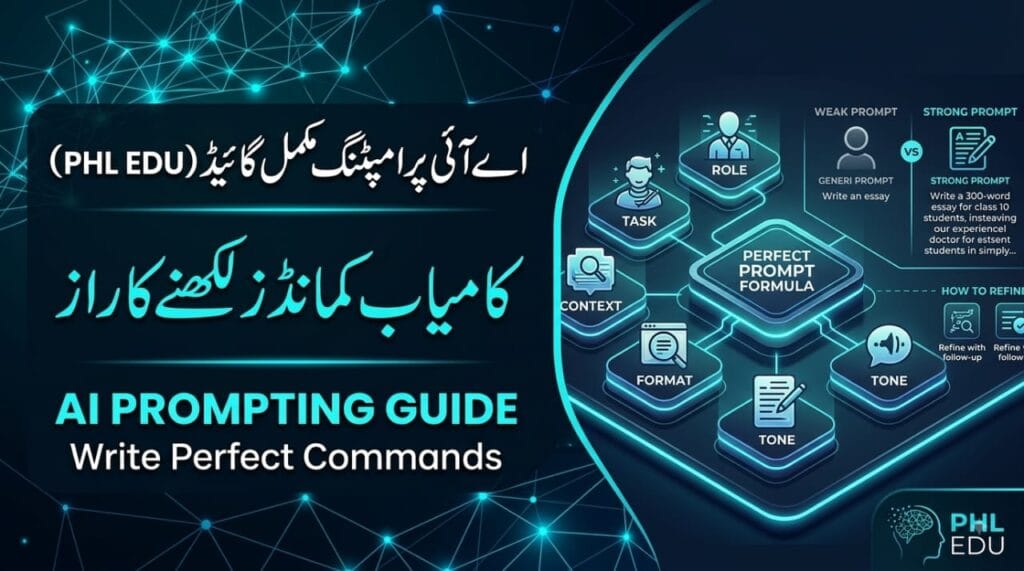
🎯 کامل Prompt لکھنے کا فارمولا
یہ فارمولا یاد رکھیں — یہ ہمیشہ کام آئے گا:
Role + Task + Context + Format + ToneRole — AI کو کردار دیں: “تم ایک ماہر استاد ہو” Task — کام بتائیں: “یہ مضمون لکھو” Context — پس منظر دیں: “پاکستانی طلبہ کے لیے، Class 10” Format — شکل بتائیں: “300 الفاظ، 3 پیراگراف” Tone — لہجہ بتائیں: “آسان، دوستانہ زبان میں”
یہ پانچوں مل کر ایک ہی Prompt بناتے ہیں: “You are an expert teacher. Write an essay about… for Pakistani class 10 students. 300 words, 3 paragraphs, simple friendly language.”
🌍 اپنی اردو خواہش کو انگلش Prompt میں کیسے بدلیں
یہ تین آسان قدم اپنائیں:
واضح کریں: پہلے اپنے دل میں طے کریں — مجھے کیا چاہیے، کس کے لیے، کیسا، کتنا بڑا۔
اردو میں لکھیں: “مجھے یونیورسٹی داخلے کے لیے انگلش میں ایک خط چاہیے، آسان زبان میں، ایک صفحے کا۔”
انگلش Prompt بنائیں: اسی خواہش کو مکمل انگلش Prompt میں تبدیل کریں۔
راز کی بات:
آپ AI کو اردو میں بھی Prompt دے سکتے ہیں — AI اردو سمجھتا ہے۔ لیکن مکمل انگلش Prompt سے عام طور پر زیادہ Accurate جواب ملتا ہے، خاص طور پر تفصیلی یا تکنیکی کاموں میں۔
🎭 لہجہ (Tone) کیسے سیٹ کریں
بس Prompt میں یہ الفاظ شامل کریں — یہ AI کا انداز بدل دیتے ہیں:
موقع
Tone Word
سرکاری خط، Job Application
formal, professional, official
دوستانہ پیغام
friendly, casual, conversational
بچوں یا نئے سیکھنے والوں کے لیے
simple, easy, for beginners
علمی/تحقیقی کام
academic, scholarly, technical
Sales یا ترغیبی مواد
persuasive, compelling
AI prompting means giving AI clear, correct instructions — so you get exactly the response you actually need. Whether you’re using ChatGPT, Claude, or Gemini, the rules are the same: AI is an incredibly capable assistant, but if your instructions aren’t clear, it will just guess. In this guide, we’ll cover in plain language exactly how to write a perfect prompt.
💡 What Exactly Is a Prompt?
A prompt is the instruction or question you give an AI in writing. The clearer, more complete, and more detailed your prompt is, the better and more relevant the AI’s response will be.
Simple example:
Imagine you hired a new employee who’s skilled but doesn’t know your preferences yet. Say “make food” and you’ll get anything. Say “make a mild chicken curry and rice for 4 people at 7pm” and you’ll get exactly what you wanted. AI works exactly the same way.
⚖️ The Difference Between a Weak and a Strong Prompt
See the difference in a real example:
❌ Weak Prompt
“Write an essay.”
AI has no idea what topic, how long, or for whom.
✅ Strong Prompt
“Write a 300-word essay about the benefits of AI in education for a Pakistani class 10 student. Use simple English, 3 paragraphs.”
You’ll get exactly what you needed.
🎯 The Perfect Prompt Formula
Remember this formula — it works every time:
Role + Task + Context + Format + ToneRole — give AI a persona: “You are an expert teacher” Task — state the job: “Write this essay” Context — add background: “For Pakistani class 10 students” Format — specify shape: “300 words, 3 paragraphs” Tone — set the voice: “Simple, friendly language”
Combine all five into one prompt: “You are an expert teacher. Write an essay about… for Pakistani class 10 students. 300 words, 3 paragraphs, simple friendly language.”
🌍 Turning Your Own Idea Into a Strong English Prompt
Follow these three simple steps:
Get clear first: Decide in your own mind exactly what you need, for whom, what style, how long.
Write it out plainly: “I need a formal letter in English for university admission, simple language, one page.”
Turn it into a full prompt: Convert that same idea into a complete, detailed English prompt.
A useful secret:
You can prompt AI in Urdu too — it understands Urdu fine. But a fully detailed English prompt generally gets you a more accurate response, especially for detailed or technical tasks.
🎭 How to Set the Tone
Just add these words to your prompt — they change the AI’s entire style:
PHL EDU WITH AI: Empowering your future with free education, AI tools, LMS, and digital skill solutions
🎭 AI کو Role دینا — بہتر جواب کا راز
جب آپ AI کو کوئی Role دیتے ہیں تو وہ اس کردار کی طرح سوچنا شروع کر دیتا ہے اور جواب بہت بہتر ہوتا ہے۔
❌ بغیر Role
“What medicine should I take for a headache?”
عام سا جواب ملے گا
✅ Role کے ساتھ
“You are an experienced doctor. What should a patient consider before taking headache medicine? Explain simply.”
ماہرانہ اور مکمل جواب!
🔄 جب جواب پسند نہ آئے — Follow-up سے بہتر کریں
نیا Prompt لکھنے کی ضرورت نہیں — اسی Conversation میں یہ جملے استعمال کریں:
مسئلہ
کیا لکھیں
بہت لمبا ہے
“Make it shorter — only 100 words.”
بہت مشکل ہے
“Explain this more simply, I’m a student.”
مثال چاہیے
“Give me 3 real examples of this.”
اردو میں چاہیے
“Now translate this to simple Urdu.”
format بدلنی ہے
“Present this as a bullet point list.”
🖼️ AI سے تصویر بنانے کا Prompt
Image بنانے والے AI Tools کے لیے زیادہ Descriptive لکھنا پڑتا ہے۔ فارمولا: Subject + Setting + Lighting/Mood + Style + Quality
مثال:
“A young Pakistani student studying at a desk with books, warm afternoon light through a window, peaceful bedroom setting, photorealistic, 4K quality”
📋 استعمال کے لیے تیار Prompts
کام
Prompt
مضمون لکھوانا
“Write a 300-word essay about [topic] for a Pakistani class 10 student. Simple English, 3 paragraphs.”
اردو ترجمہ
“Translate this to simple, everyday Urdu, keeping the meaning exact: [text]”
گرامر درست کروانا
“Correct the grammar in this and explain each mistake simply: [text]”
خط لکھوانا
“Write a formal application letter in English. Reason: [reason]. Under 150 words.”
Vocabulary بڑھانا
“Give me 10 advanced English words about [topic] with meaning, Urdu translation, and an example sentence.”
CV بنانا
“Write a professional CV for a fresh Pakistani graduate in [field]. Include objective, education, skills.”
Study Plan بنانا
“Create a 4-week study plan for [exam], 2 hours a day, with topics and tips.”
⚠️ Prompting میں یہ غلطیاں نہ کریں
مبہم Prompt: “Write something about Pakistan” — AI کو نہیں پتہ کیا لکھے۔
ایک ہی Prompt میں بہت سے کام: ایک وقت میں ایک کام پر Focus رکھیں۔
ذاتی معلومات دینا: CNIC، Password، بینک تفصیلات کبھی AI کو نہ دیں۔
آنکھ بند کر کے اعتماد: AI غلط بھی بول سکتا ہے — اہم Facts ہمیشہ Verify کریں۔
جواب سیدھا Copy کرنا: سمجھ کر اپنے الفاظ میں لکھیں — خاص طور پر تعلیمی کام میں۔
اہم Prompting اصطلاحات
اصطلاح
تشریح
Prompt
AI کو دی گئی ہدایت یا سوال
Prompt Engineering
اچھے Prompts لکھنے کی مہارت — اب ایک باقاعدہ Skill ہے
Context
پس منظر کی معلومات جو جواب کو بہتر بناتی ہے
Tone
لکھائی کا انداز — formal، friendly، وغیرہ
Role / Persona
AI کو دیا گیا کردار جس کی طرح وہ جواب دیتا ہے
Refine
جواب کو Follow-up سے بہتر بنانا
Output
AI کا دیا گیا جواب
Chain of Thought
AI کو مرحلہ وار سوچنے پر آمادہ کرنا
Constraints
Prompt میں حدیں طے کرنا (مثلاً “under 100 words”)
Verify / Fact-check
AI کے جواب کی درستگی خود چیک کرنا
اکثر پوچھے گئے سوالات
Prompt Engineering کیا ہے اور کیا یہ سیکھنی ضروری ہے؟
یہ اچھے AI Prompts لکھنے کی مہارت ہے۔ آج کل یہ ایک باقاعدہ اور Demand والی Skill ہے، خاص طور پر Content، Design اور Freelancing کے شعبوں میں۔
کیا Prompting صرف ChatGPT کے لیے کام آتی ہے؟
نہیں، یہی اصول ChatGPT، Claude، Gemini اور تقریباً ہر AI Assistant پر یکساں لاگو ہوتے ہیں۔
اگر پہلا جواب پسند نہ آئے تو نیا Chat شروع کرنا چاہیے؟
عام طور پر نہیں۔ اسی Conversation میں “Make it shorter” یا “Explain simply” جیسے Follow-up سے جواب بہتر کیا جا سکتا ہے۔
Image بنانے کے لیے Prompt کیسے مختلف ہوتا ہے؟
Image Prompt میں زیادہ Descriptive تفصیل درکار ہوتی ہے — Subject، Background، Lighting، Style اور Quality سب شامل کریں۔
کیا AI کو Urdu میں Prompt دیا جا سکتا ہے؟
جی ہاں، AI اردو سمجھتا ہے۔ لیکن تفصیلی یا تکنیکی کاموں کے لیے مکمل انگلش Prompt عام طور پر زیادہ Accurate جواب دیتا ہے۔
Role دینے سے واقعی جواب بہتر ہوتا ہے؟
جی ہاں۔ “You are an experienced doctor/teacher/lawyer” جیسا Role دینے سے AI اسی نقطہ نظر سے زیادہ مکمل اور متعلقہ جواب دیتا ہے۔
🎭 Giving AI a Role — the Secret to Better Answers
When you give AI a role, it starts thinking like that persona, and the response gets noticeably better.
❌ Without a role
“What medicine should I take for a headache?”
A generic answer
✅ With a role
“You are an experienced doctor. What should a patient consider before taking headache medicine? Explain simply.”
An expert, complete answer
🔄 When the Answer Isn’t Right — Refine With a Follow-up
No need to write a new prompt — use these phrases in the same conversation:
Problem
What to write
Too long
“Make it shorter — only 100 words.”
Too complex
“Explain this more simply, I’m a student.”
Need examples
“Give me 3 real examples of this.”
Need it in Urdu
“Now translate this to simple Urdu.”
Need a different format
“Present this as a bullet point list.”
🖼️ Writing a Prompt for AI Image Generation
Image generation tools need far more descriptive prompts. Formula: Subject + Setting + Lighting/Mood + Style + Quality
Example:
“A young Pakistani student studying at a desk with books, warm afternoon light through a window, peaceful bedroom setting, photorealistic, 4K quality”
📋 Ready-to-Use Prompts
Task
Prompt
Write an essay
“Write a 300-word essay about [topic] for a Pakistani class 10 student. Simple English, 3 paragraphs.”
Urdu translation
“Translate this to simple, everyday Urdu, keeping the meaning exact: [text]”
Fix grammar
“Correct the grammar in this and explain each mistake simply: [text]”
Write a letter
“Write a formal application letter in English. Reason: [reason]. Under 150 words.”
Build vocabulary
“Give me 10 advanced English words about [topic] with meaning, Urdu translation, and an example sentence.”
Build a CV
“Write a professional CV for a fresh Pakistani graduate in [field]. Include objective, education, skills.”
Make a study plan
“Create a 4-week study plan for [exam], 2 hours a day, with topics and tips.”
⚠️ Prompting Mistakes to Avoid
Vague prompts: “Write something about Pakistan” — AI has no idea what to write.
Too many tasks in one prompt: Focus on one task at a time.
Sharing personal information: Never give AI your ID number, passwords, or bank details.
Blind trust: AI can be wrong — always verify important facts.
Copying the answer directly: Understand it and rewrite it in your own words, especially for academic work.
Key Prompting Terms
Term
Explanation
Prompt
The instruction or question given to AI
Prompt Engineering
The skill of writing good prompts — now a real, in-demand skill
Context
Background information that improves the response
Tone
The writing style — formal, friendly, etc.
Role / Persona
The character given to AI, which shapes its answer
Refine
Improving a response with a follow-up
Output
The response AI gives back
Chain of Thought
Getting AI to reason step by step
Constraints
Limits set in a prompt (e.g., “under 100 words”)
Verify / Fact-check
Checking an AI response for accuracy yourself
Frequently Asked Questions
What is prompt engineering, and do I need to learn it?
It’s the skill of writing good AI prompts. It’s now a real, in-demand skill, especially in content, design, and freelancing.
Does prompting only work for ChatGPT?
No, these same principles apply equally to ChatGPT, Claude, Gemini, and nearly every AI assistant.
If the first answer isn’t right, should I start a new chat?
Usually not. Use a follow-up in the same conversation, like “make it shorter” or “explain simply,” to refine the answer.
How is an image prompt different?
Image prompts need far more descriptive detail — include the subject, background, lighting, style, and quality.
Can I prompt AI in Urdu?
Yes, AI understands Urdu well. But a fully detailed English prompt generally gives a more accurate response for detailed or technical tasks.
Does giving AI a role actually improve the answer?
Yes. Giving a role like “You are an experienced doctor/teacher/lawyer” leads to a more complete, relevant answer from that perspective.