مصنوعی ذہانت کیا ہے؟
What is Artificial Intelligence?
اگر آپ نے کبھی سوچا ہے کہ مصنوعی ذہانت (AI) اصل میں کیا ہے، تو یہ گائیڈ بالکل آپ کے لیے ہے۔ یہ ایک 5 حصوں کی سیریز کا پہلا حصہ ہے، جس میں ہم AI کو صفر سے سمجھیں گے — بغیر کسی مشکل ٹیکنیکل زبان کے، صرف آسان اردو اور انگلش میں۔
If you’ve ever wondered what Artificial Intelligence (AI) actually is, this guide is for you. This is Part 1 of a 5-part series where we explain AI from zero — no technical background needed, just plain Urdu and English.
اس پوسٹ میں شامل ہے: AI کی آسان تعریف، مختصر تاریخ، AI کیسے کام کرتی ہے، اور 30 اہم AI الفاظ اردو معنی اور مثالوں کے ساتھ۔
In this post: a simple definition of AI, a brief history, how AI actually works, and 30 essential AI vocabulary words with Urdu meanings and examples.
مصنوعی ذہانت کی تعریف
The Definition of Artificial Intelligence
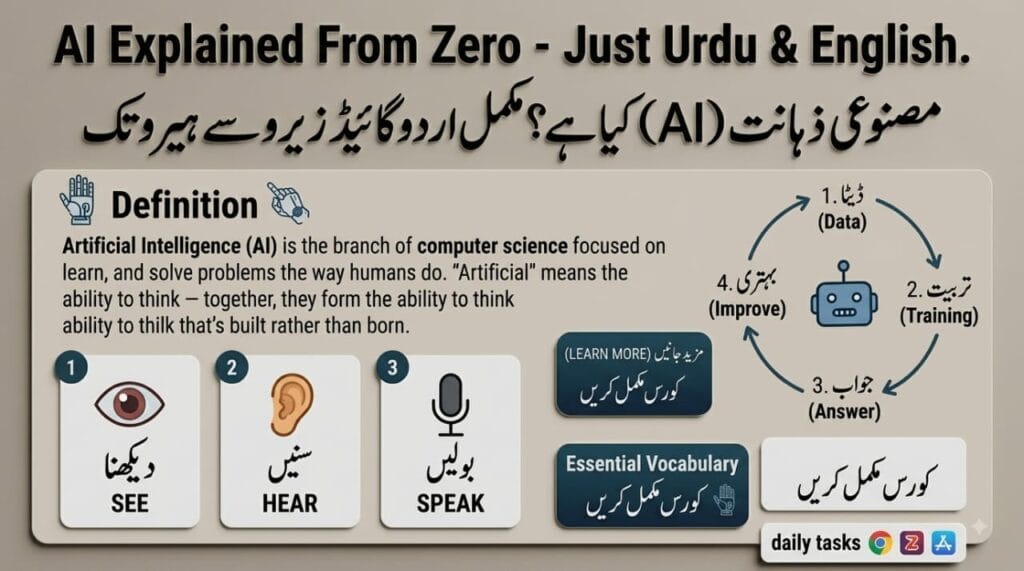
Artificial Intelligence (AI) کمپیوٹر سائنس کی وہ شاخ ہے جس میں مشینوں کو اس طرح ڈیزائن کیا جاتا ہے کہ وہ انسانوں کی طرح سوچ سکیں، سیکھ سکیں اور مسائل حل کر سکیں۔ “Artificial” یعنی مصنوعی، اور “Intelligence” یعنی ذہانت — دونوں مل کر بنتی ہے مصنوعی ذہانت۔
Artificial Intelligence (AI) is the branch of computer science focused on designing machines that can think, learn, and solve problems the way humans do. “Artificial” means man-made, and “Intelligence” means the ability to think — together, they form the ability to think that’s built rather than born.
مثال کے طور پر: جب آپ اپنے فون سے پوچھیں “آج موسم کیسا ہے؟” اور وہ صحیح جواب دے دے — یہ AI ہے۔
For example: when you ask your phone “What’s the weather today?” and it gives the correct answer — that’s AI at work.
AI کی تین بنیادی صلاحیتیں
AI’s Three Core Abilities
تصاویر پہچاننا
Recognize images
آواز سمجھنا
Understand speech
جواب دینا
Respond back
مزید پڑھیں
Related Reads
AI کی مختصر تاریخ
A Brief History of AI
- 1950: سائنسدان Alan Turing نے پہلی بار سوال اٹھایا کہ کیا مشینیں سوچ سکتی ہیں، اور “Turing Test” ایجاد کیا۔
- 1956: John McCarthy نے پہلی بار “Artificial Intelligence” کی اصطلاح دنیا سے متعارف کرائی — AI کا سرکاری جنم دن۔
- 1997: IBM کے کمپیوٹر Deep Blue نے دنیا کے بہترین شطرنج کھلاڑی کو شکست دی۔
- 2011: Apple نے Siri لانچ کی — پہلی بار AI ہر کسی کے ہاتھ میں آ گئی۔
- 2022: OpenAI نے ChatGPT لانچ کی — صرف 5 دن میں 10 لاکھ صارفین، اور دنیا بدل گئی۔
- آج: AI ڈاکٹر، استاد اور انجینئر ہر شعبے میں موجود ہے۔
- 1950: Scientist Alan Turing first asked whether machines can think, and introduced the “Turing Test.”
- 1956: John McCarthy coined the term “Artificial Intelligence” — AI’s official birthday.
- 1997: IBM’s Deep Blue defeated the world’s best chess champion.
- 2011: Apple launched Siri — AI reached everyone’s pocket for the first time.
- 2022: OpenAI launched ChatGPT — 1 million users in just 5 days, changing the world.
- Today: AI shows up in medicine, teaching, and engineering — nearly every field.
AI کیسے کام کرتی ہے؟
How Does AI Actually Work?
1ڈیٹا: AI کو پہلے بہت زیادہ معلومات دی جاتی ہیں — ہزاروں تصاویر، لاکھوں جملے۔ یہی اس کی تعلیم ہے۔
1Data: AI is first given massive amounts of information — thousands of images, millions of sentences. This is its education.
2ٹریننگ: AI اس data سے patterns سیکھتی ہے، بالکل ویسے جیسے بچہ دیکھ کر سیکھتا ہے — مگر بہت تیزی سے۔
2Training: AI learns patterns from that data, much like a child learns by observing — just far faster.
3جواب: جب آپ سوال کریں تو AI اپنی ٹریننگ کی بنیاد پر فوری جواب دیتی ہے۔
3Answer: When you ask a question, AI generates an instant answer based on its training.
4بہتری: لوگوں کے feedback سے AI مسلسل بہتر ہوتی جاتی ہے — یہ سیکھنے کا لامتناہی عمل ہے۔
4Improve: AI keeps getting better from human feedback — an ongoing, never-ending learning loop.
یاد رکھیں: AI کوئی جادو نہیں — یہ ریاضی اور statistics پر مبنی نظام ہے جو data سے سیکھتا ہے۔ جتنا بہتر data، اتنی بہتر AI۔
Remember: AI isn’t magic — it’s a system built on math and statistics that learns from data. Better data means better AI.
آج کے 30 اہم AI الفاظ
30 Essential AI Vocabulary Words
| English Word | اردو معنی | Example Sentence |
|---|---|---|
| Artificial Intelligence | مصنوعی ذہانت | AI can write essays, answer questions, and create images. |
| Algorithm | الگورتھم — قدم بقدم ہدایت | Google uses an algorithm to rank search results. |
| Data | ڈیٹا — خام معلومات | AI needs large amounts of data to learn. |
| Training | تربیت — سکھانے کا عمل | ChatGPT went through months of training. |
| Neural Network | عصبی شبکہ — دماغ جیسا ڈھانچہ | A neural network mimics how the human brain works. |
| Machine Learning | مشین لرننگ | Netflix uses machine learning to suggest movies. |
| Model | ماڈل — AI کا ڈھانچہ | GPT-4 is a powerful AI language model. |
| Input | ان پٹ — دی گئی معلومات | Type your question as the input to ChatGPT. |
| Output | آؤٹ پٹ — نتیجہ | The AI output was a perfect essay. |
| Pattern | نمونہ — طرز | AI finds patterns in data to make predictions. |
| Prediction | پیشگوئی | AI makes a prediction about tomorrow’s weather. |
| Accuracy | درستگی | The face recognition system has 99% accuracy. |
| Robot | روبوٹ — خودکار مشین | Factory robots use AI to assemble cars. |
| Automation | خودکاری | AI automation is changing many industries. |
| Processing | معلومات پر کارروائی | Fast GPUs are used for AI processing. |
| Program | پروگرام — ہدایات | AI runs on a complex computer program. |
| Code | کوڈ | Python code is used to build AI systems. |
| Prompt | پرامپٹ — AI کو دی گئی ہدایت | Write a clear prompt to get a great answer. |
| Response | جواب، ردعمل | AI generates a response in seconds. |
| Technology | ٹیکنالوجی | AI is the most exciting technology of our time. |
| Revolution | انقلاب | AI is causing a revolution in every field. |
| Innovation | اختراع، ایجاد | ChatGPT was a massive AI innovation. |
| Intelligent | ذہین | An intelligent AI solves complex problems easily. |
| Automated | خودکار | The customer service is fully automated by AI. |
| Virtual | مجازی | A virtual assistant helps with daily tasks. |
| Digital | ڈیجیٹل | We live in a digital age driven by AI. |
| Analysis | تجزیہ | AI performs data analysis in seconds. |
| Predictive Analysis | پیشگوئی تجزیہ | AI uses predictive analysis to forecast trends. |
| Solution | حل | AI provides solutions to complex problems. |
| Future | مستقبل | The future belongs to those who understand AI. |
اس سیریز میں اور کیا آنے والا ہے؟
What’s Next in This Series?
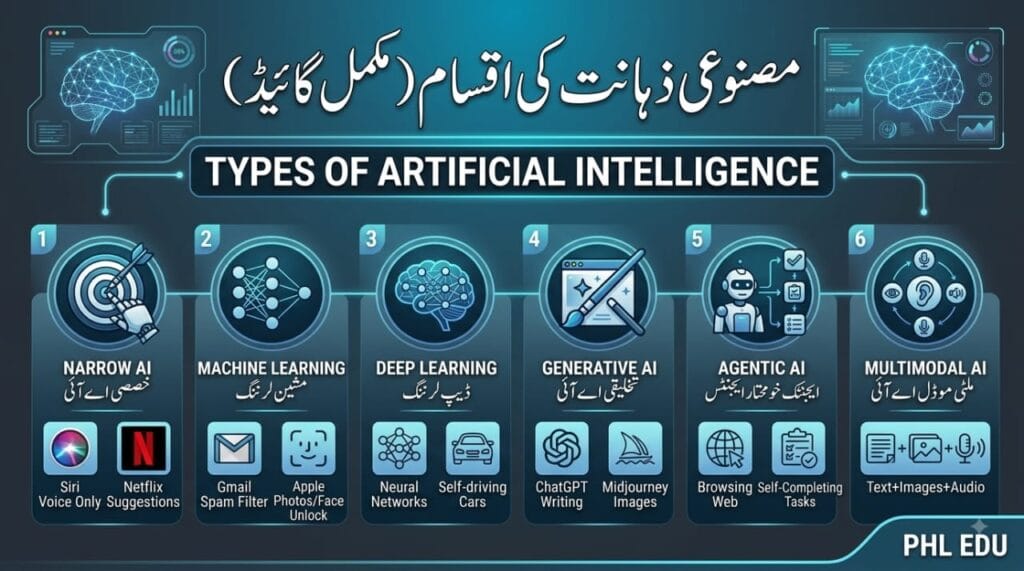
یہ صرف Part 1 ہے۔ Part 2 میں ہم AI کی اقسام سیکھیں گے — Machine Learning، Deep Learning اور Generative AI۔ باقی حصے نیچے دیے گئے سیریز نیویگیشن سے کھولے جا سکتے ہیں۔
This is just Part 1. In Part 2, we cover the types of AI — Machine Learning, Deep Learning, and Generative AI. The rest of the parts are available in the series navigation above and below.
اکثر پوچھے گئے سوالات
Frequently Asked Questions
AI سیکھنے کے لیے کیا کوڈنگ آنی ضروری ہے؟
نہیں۔ AI ٹولز جیسے ChatGPT یا Gemini استعمال کرنے کے لیے کوڈنگ کی ضرورت نہیں۔ صرف انٹرنیٹ کنکشن اور تجسس کافی ہے — کوڈنگ صرف اس وقت درکار ہوتی ہے جب آپ خود AI سسٹمز بنانا چاہیں۔
مشین لرننگ اور AI میں کیا فرق ہے؟
AI ایک وسیع تصور ہے — مشینوں کو ذہین بنانا۔ Machine Learning اس کا ایک ذیلی حصہ ہے جس میں مشین ڈیٹا سے خود سیکھتی ہے۔ اگلی قسط (Part 2) میں یہ فرق مزید تفصیل سے سمجھایا جائے گا۔
کیا AI مستقبل میں نوکریاں ختم کر دے گی؟
AI کچھ کام خودکار ضرور کرے گی، لیکن نئی مہارتیں سیکھنے والوں کے لیے نئے مواقع بھی پیدا کرے گی۔ AI کو سمجھنا اور استعمال کرنا سیکھنا خود ایک قیمتی مہارت ہے۔
Part 1 کے بعد اگلا سبق کہاں ملے گا؟
اوپر دی گئی سیریز نیویگیشن سے Part 2 تا Part 5 تک رسائی حاصل کریں، اور مزید پریکٹس کے لیے ہمارے PHL Quizzes بھی ضرور دیکھیں۔
Do I need to know coding to learn AI?
No. Using AI tools like ChatGPT or Gemini requires no coding at all — just an internet connection and curiosity. Coding only becomes necessary if you want to build AI systems yourself.
What’s the difference between Machine Learning and AI?
AI is the broad concept — making machines intelligent. Machine Learning is a subset of AI where the machine learns from data on its own. This distinction is explained in more depth in Part 2.
Will AI eliminate jobs in the future?
AI will automate some tasks, but it will also create new opportunities for people who learn new skills. Understanding and using AI is itself becoming a valuable skill.
Where can I find the next lesson after Part 1?
Use the series navigation above to access Parts 2 through 5, and check out our PHL Quizzes for more practice.
ڈسکلیمر: یہ پوسٹ صرف تعلیمی مقاصد کے لیے تیار کی گئی ہے۔ AI ٹیکنالوجی مسلسل تبدیل ہو رہی ہے، اس لیے تازہ ترین معلومات کے لیے ہمیشہ معتبر ذرائع استعمال کریں۔
Disclaimer: This post is for educational purposes only. AI technology evolves rapidly, so always refer to credible sources for the latest information.
ہماری مزید فری ٹولز اور رہنمائی دیکھیں
Explore more of our free tools and guides