Complete SEO Course — Mobile، Schema، Analytics اور Career تک (حصہ دوم)
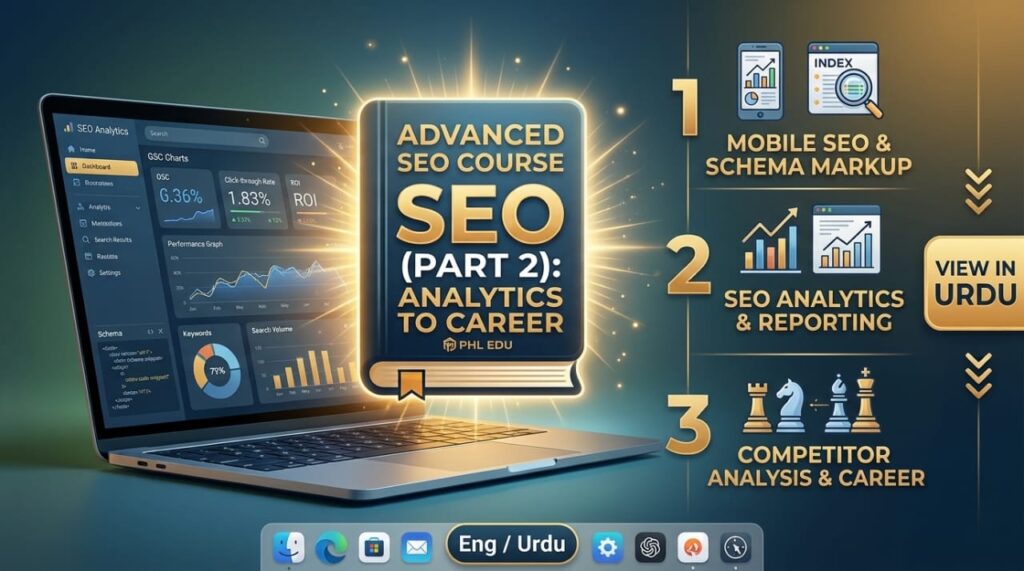
Advanced SEO Course Part 2: Analytics to Career
یہ Complete SEO Course کا حصہ دوم ہے۔ اگر آپ نے حصہ اول نہیں پڑھا — جس میں SEO کا تعارف، Keyword Research، On-Page، Content، Technical، Off-Page، Local اور E-Commerce SEO شامل ہیں — تو پہلے وہ ضرور دیکھیں۔ اس حصے میں ہم Mobile SEO، Structured Data، International SEO، Video SEO، Analytics، Competitor Analysis، SEO Audits، Advanced SEO، AI Search کے لیے SEO اور ایک SEO Freelancer کے طور پر Career بنانے کی مکمل تفصیل تشریح کے ساتھ دیکھیں گے۔
آج کل زیادہ تر Traffic Mobile سے آتا ہے، اور Google بھی Mobile Version کو ترجیح دیتا ہے — اس لیے یہ Module نظر انداز نہیں کیا جا سکتا۔
اصطلاح
تشریح
Mobile-First Indexing
Google رینکنگ کے لیے بنیادی طور پر Mobile Version دیکھتا ہے
Responsive Websites
ہر Screen Size پر خود بخود بہتر انداز میں ڈھلنے والی سائٹ
Core Web Vitals
صفحے کی Speed اور تجربے کے 3 اہم معیارات
Largest Contentful Paint
سب سے بڑا Element کتنی جلدی نظر آتا ہے
Interaction to Next Paint
صارف کے Click کا صفحہ کتنی تیزی سے جواب دیتا ہے
Cumulative Layout Shift
صفحہ لوڈ ہوتے وقت Elements کا اچانک ہلنا
Image Compression
تصاویر کا سائز کم کر کے Speed بہتر بنانا
Browser Caching
دوبارہ وزٹ پر صفحہ تیزی سے لوڈ کرنے کی تکنیک
CDN
Content Delivery Network — دنیا بھر میں تیز رفتار Content Delivery
🏷️ Module 13 — Structured Data & Schema Markup
Schema Markup Google کو آپ کے مواد کی نوعیت “پڑھنے” میں مدد دیتا ہے — اور اکثر Search میں خوبصورت Rich Results دلاتا ہے۔
اصطلاح
تشریح
Structured Data
Search Engines کے لیے مشین ریڈی فارمیٹ میں معلومات
Organization / Article Schema
کاروبار یا مضمون کی معلومات Structured طریقے سے بیان کرنا
Product / Review Schema
قیمت اور Ratings کو Search میں براہِ راست دکھانا
FAQ Schema
سوال جواب کو Search میں Expandable شکل میں دکھانا
Breadcrumb / Local Business Schema
Navigation Path اور مقامی کاروبار کی معلومات کا Structured ڈیٹا
Rich Results
Schema کی بدولت Search میں نظر آنے والے اضافی Visual عناصر
🌍 Module 14 — International & Multilingual SEO
اگر آپ کی سائٹ ایک سے زیادہ ملک یا زبان کے لیے ہے، تو یہاں چھوٹی سی غلطی بھی Duplicate Content کا مسئلہ بنا سکتی ہے۔
اصطلاح
تشریح
Country / Language Targeting
مخصوص ملک یا زبان کے لیے مواد کی سمت بندی
Hreflang
Google کو بتانا کہ کون سا صفحہ کس زبان/ملک کے لیے ہے
Country-Specific Domains
مثلاً .pk، .uk جیسے ملک کے مطابق Domain
Subdomains / Subdirectories
مختلف زبانوں کے لیے الگ Subdomain یا Folder کا انتخاب
Duplicate Content Across Languages
مختلف زبانوں کے صفحات کو Google کے لیے واضح رکھنا
🎬 Module 15 — Video SEO
YouTube خود دنیا کا دوسرا بڑا Search Engine ہے — Video SEO سیکھنا ایک الگ ہی مواقع کا دروازہ کھولتا ہے۔
اصطلاح
تشریح
Video Titles / Descriptions / Tags
Video کو Search میں تلاش ہونے کے قابل بنانے والے عناصر
Video Thumbnails
Video پر Click بڑھانے والی تصویر
Watch Time / Audience Retention
لوگ Video کتنی دیر اور کتنے فیصد دیکھتے ہیں
Video Schema
Video کو Search نتائج میں Rich شکل میں دکھانے والا Structured Data
This is Part 2 of the Complete SEO Course. If you haven’t read Part 1 — covering the fundamentals of SEO, keyword research, on-page, content, technical, off-page, local, and e-commerce SEO — check that out first. This part covers mobile SEO, structured data, international SEO, video SEO, analytics, competitor analysis, SEO audits, advanced SEO, SEO for AI search, and building a career as an SEO freelancer, with every term explained.
PHL EDU WITH AI: Empowering your future with free education, AI tools, LMS, and digital skill solutions.
📊 Module 16 — SEO Analytics & Reporting
جو ناپا نہ جا سکے، اسے بہتر بھی نہیں کیا جا سکتا — یہ Module بتاتا ہے کہ SEO کی کارکردگی کیسے ناپیں اور Report بنائیں۔
اصطلاح
تشریح
Organic Traffic
Search Engines سے مفت آنے والے Visitors
Click-Through Rate (CTR)
دیکھنے والوں میں سے Click کرنے والوں کا تناسب
Impressions
آپ کا صفحہ Search میں کتنی بار دکھایا گیا
Average Position
Search نتائج میں اوسط پوزیشن
Conversion Tracking
Visitors کے اصل Actions (خریداری/فارم) کی پیمائش
SEO KPIs / Dashboards
کارکردگی ناپنے کے اہم اشارے اور ان کا Visual خلاصہ
Measuring SEO ROI
SEO پر خرچ کیے گئے وسائل کا اصل فائدہ ناپنا
🕵️ Module 17 — Competitor SEO Analysis
اپنے Competitors کو سمجھنا اکثر آپ کی اپنی حکمتِ عملی سے بھی زیادہ سکھاتا ہے۔
اصطلاح
تشریح
Competitor Keyword Research
Competitors کن Keywords پر Rank کر رہے ہیں، یہ دیکھنا
Competitor Backlink Analysis
Competitors کو کہاں سے Links مل رہے ہیں
Content / Keyword Gap Analysis
Competitors کے پاس موجود مگر آپ کے پاس نہ ہونے والے مواقع
Competitor SERP Analysis
کسی Keyword پر Rank کرنے والے نتائج کا تجزیہ
🩺 Module 18 — SEO Audits
SEO Audit کسی بھی نئی حکمتِ عملی سے پہلے کا لازمی قدم ہے — پہلے یہ جانیں کہ کھڑے کہاں ہیں۔
اصطلاح
تشریح
SEO Audit
سائٹ کی مکمل Technical، Content اور Backlink صحت کا جائزہ
Technical / On-Page / Content Audit
مختلف پہلوؤں کا الگ الگ تفصیلی جائزہ
Backlink Audit
اچھے اور نقصان دہ Links کی شناخت
Indexing / Duplicate Content Audit
کون سے صفحات Index ہیں اور کہاں Duplicate مسائل ہیں
SEO Action Plan
Audit کے بعد بہتری کے لیے ترجیحی فہرست
🚀 Module 19 — Advanced SEO
جب بنیادی باتیں آ جائیں، تو یہ Module بڑی اور پیچیدہ Websites کے لیے ضروری مہارتیں سکھاتا ہے۔
اصطلاح
تشریح
Semantic SEO / Entity-Based SEO
صرف الفاظ نہیں بلکہ ان کے پیچھے موجود Concept کو Optimize کرنا
Topical Authority
کسی ایک موضوع پر Website کا مکمل Expert بن جانا
Programmatic SEO
Automation سے ہزاروں صفحات بنانا اور Optimize کرنا
Log File Analysis
Google Bots کے سائٹ پر رویے کا گہرا تجزیہ
SEO Migration
Website کا Domain یا Structure بدلتے وقت Ranking بچانا
SEO Risk Management
بڑی تبدیلیوں سے پہلے ممکنہ نقصان کا اندازہ لگانا
🤖 Module 20 — SEO for AI Search & Modern Search
Search اب صرف نیلے لنکس تک محدود نہیں — AI پر مبنی Search Experiences تیزی سے عام ہو رہے ہیں، اور SEO کو بھی اسی کے مطابق ڈھلنا ہوگا۔
اصطلاح
تشریح
Generative Search Experiences
AI کا سوال کے جواب میں مکمل خلاصہ تیار کرنا
AI Search Visibility
آپ کا مواد AI کے جوابات میں حوالے کے طور پر آنا
Entity Optimization
Google کو یہ واضح کرنا کہ آپ اصل میں کس چیز/شخص/کاروبار کے بارے میں لکھ رہے ہیں
First-Hand Experience
مواد میں اصل تجربہ اور مہارت ظاہر کرنا (E-E-A-T سے جڑا ہوا)
Human-Centered Content
صرف Algorithm کے لیے نہیں بلکہ حقیقی انسانوں کے لیے مفید مواد
💼 Module 21 — SEO Freelancing & Career
سیکھنا صرف آدھا سفر ہے — اسے آمدنی میں بدلنا اگلا قدم ہے۔
اصطلاح
تشریح
SEO Portfolio / Case Studies
اپنے کیے گئے کام اور نتائج کی مثالیں جمع کرنا
Finding SEO Clients
Freelancing Platforms یا براہِ راست رابطے سے Clients ڈھونڈنا
SEO Proposal Writing
Client کو اپنی خدمات کا واضح، پرکشش تجویزی خط لکھنا
SEO Pricing Models
ماہانہ Package، فی گھنٹہ یا فی Project قیمت کا تعین
SEO Career Roadmap
Beginner سے Agency Owner تک کا ممکنہ سفر
🧩 Module 22 — Practical SEO Projects
SEO صرف پڑھنے سے نہیں بلکہ عملی طور پر کرنے سے سیکھی جاتی ہے۔ حقیقی یا مشقی Website پر یہ سب Practice کریں: Keyword Research، Homepage اور Blog Optimization، Internal Linking Strategy، Technical Audit، Competitor Analysis، Content Strategy، Local/E-Commerce Strategy، Backlink Audit، اور SEO Report بنانا۔
🎓 Final Capstone Project
Course کے آخر میں ایک مکمل SEO Project (حقیقی یا مشقی Website پر) مکمل کرنا چاہیے، جس میں یہ سب شامل ہو:
Website اور Competitor Analysis
مکمل Keyword Research اور Search Intent Analysis
Keyword Mapping
Technical اور On-Page SEO Audit
Content Gap Analysis اور Content Strategy
Internal Linking اور Backlink Strategy
Local یا E-Commerce SEO Strategy (حسبِ ضرورت)
SEO Implementation Plan اور Google Search Console Setup
Performance Tracking اور ماہانہ SEO Report
3 سے 6 ماہ کی SEO Growth Strategy
آخری بات:
اگر آپ SEO کو صرف ایک مختصر Skill کے طور پر نہیں بلکہ ایک مکمل Professional Career کے طور پر سیکھنا چاہتے ہیں تو صرف Keywords اور Backlinks تک محدود نہ رہیں۔ ایک اچھا SEO Professional Website، Content، Technical SEO، Search Intent، Data اور User Experience کو ایک ساتھ سمجھتا ہے۔ SEO میں کامیابی کا اصل راستہ صرف Course مکمل کرنا نہیں بلکہ مسلسل Practice، Testing، Analysis اور Real Websites پر کام کرنا ہے۔
ڈسکلیمر: یہ Course Outline تعلیمی اور معلوماتی مقصد کے لیے تیار کیا گیا ہے۔ SEO ایک مسلسل تبدیل ہونے والا شعبہ ہے اور Search Engines وقت کے ساتھ اپنے Ranking Systems، Features اور Best Practices میں تبدیلی کرتے رہتے ہیں۔ کسی بھی حکمتِ عملی کو استعمال کرنے سے پہلے موجودہ Search Engine Guidelines ضرور چیک کریں۔ SEO سیکھنے سے کسی مخصوص Website کی Ranking، Traffic، آمدنی یا ملازمت کی کوئی ضمانت نہیں دی جا سکتی — کامیابی کا انحصار Skill، Practice، Website، Competition، Content Quality اور مسلسل محنت پر ہوتا ہے۔
اکثر پوچھے گئے سوالات
Advanced SEO سیکھنے سے پہلے کیا بنیادی چیزیں آنی چاہئیں؟
Keyword Research، On-Page اور Technical SEO کی بنیادی سمجھ ہونی چاہیے — یہ Part 1 میں شامل ہیں۔
Core Web Vitals Ranking پر کتنا اثر ڈالتے ہیں؟
یہ Google کے Page Experience Signals کا حصہ ہیں — بہتر Score رینکنگ میں مدد دے سکتا ہے، خاص طور پر جب باقی عوامل برابر ہوں۔
FAQ Schema شامل کرنے سے کیا فائدہ ہوتا ہے؟
یہ آپ کے سوالات و جوابات کو Search نتائج میں Expandable شکل میں دکھا سکتا ہے، جس سے صفحہ زیادہ جگہ گھیرتا ہے اور CTR بہتر ہو سکتا ہے۔
AI Search کے لیے SEO تبدیل کیوں کرنا ضروری ہے؟
AI پر مبنی Search Experiences جوابات کا خلاصہ خود بنا دیتے ہیں — اس لیے واضح، Entity پر مبنی اور Trustworthy مواد بنانا پہلے سے زیادہ اہم ہو گیا ہے۔
SEO Freelancing میں پہلا Client کیسے ملتا ہے؟
اپنا Portfolio یا Case Study بنائیں (کسی حقیقی یا مشقی سائٹ پر کام کر کے)، پھر Fiverr/Upwork یا براہِ راست Local Businesses سے رابطہ کریں۔
کیا Final Capstone Project کسی حقیقی Website پر کرنا ضروری ہے؟
ضروری نہیں — ایک مشقی (Practice) Website پر بھی مکمل Project کیا جا سکتا ہے، بس تمام مراحل حقیقی انداز میں مکمل کریں۔
📊 Module 16 — SEO Analytics & Reporting
What can’t be measured can’t be improved — this module covers how to measure SEO performance and build reports.
Term
Explanation
Organic Traffic
Free visitors arriving through search engines
Click-Through Rate (CTR)
The percentage of viewers who click through
Impressions
How many times your page was shown in search
Average Position
Your average ranking position in search results
Conversion Tracking
Measuring visitors’ real actions, like purchases or form submissions
SEO KPIs / Dashboards
Key performance indicators and their visual summary
Measuring SEO ROI
Measuring the actual return on resources spent on SEO
🕵️ Module 17 — Competitor SEO Analysis
Understanding your competitors often teaches you more than your own strategy alone.
Term
Explanation
Competitor Keyword Research
Seeing which keywords competitors already rank for
Competitor Backlink Analysis
Where competitors are getting their links from
Content / Keyword Gap Analysis
Opportunities competitors have that you don’t
Competitor SERP Analysis
Analyzing the results that already rank for a given keyword
🩺 Module 18 — SEO Audits
An SEO audit is an essential step before any new strategy — first, know exactly where you stand.
Term
Explanation
SEO Audit
A complete review of a site’s technical, content, and backlink health
Technical / On-Page / Content Audit
A detailed review of each specific area
Backlink Audit
Identifying good links versus harmful ones
Indexing / Duplicate Content Audit
Which pages are indexed, and where duplicate issues exist
SEO Action Plan
A prioritized list of improvements after the audit
🚀 Module 19 — Advanced SEO
Once the basics are solid, this module covers the skills needed for larger, more complex websites.
Term
Explanation
Semantic SEO / Entity-Based SEO
Optimizing for the concept behind the words, not just the words themselves
Topical Authority
Becoming a genuine expert site on one specific topic
Programmatic SEO
Using automation to build and optimize thousands of pages
Log File Analysis
A deep look at how Google’s bots actually behave on your site
SEO Migration
Preserving rankings when changing a site’s domain or structure
SEO Risk Management
Estimating potential damage before making major changes
🤖 Module 20 — SEO for AI Search & Modern Search
Search is no longer limited to blue links — AI-driven search experiences are becoming common, and SEO has to adapt with them.
Term
Explanation
Generative Search Experiences
AI generating a complete summary in response to a query
AI Search Visibility
Your content getting cited as a source in AI-generated answers
Entity Optimization
Making it clear to Google exactly what thing/person/business you’re writing about
First-Hand Experience
Demonstrating genuine experience and expertise (tied to E-E-A-T)
Human-Centered Content
Content built for real people, not just for an algorithm
💼 Module 21 — SEO Freelancing & Career
Learning is only half the journey — turning it into income is the next step.
Term
Explanation
SEO Portfolio / Case Studies
Collecting examples of your own work and results
Finding SEO Clients
Finding clients through freelancing platforms or direct outreach
SEO Proposal Writing
Writing a clear, compelling pitch of your services to a client
SEO Pricing Models
Setting monthly packages, hourly rates, or per-project pricing
SEO Career Roadmap
The path from beginner to running your own agency
🧩 Module 22 — Practical SEO Projects
SEO is learned by doing, not just by reading. On a real or practice website, work through: keyword research, homepage and blog optimization, an internal linking strategy, a technical audit, competitor analysis, a content strategy, local/e-commerce strategy, a backlink audit, and building an SEO report.
🎓 Final Capstone Project
At the end of the course, complete one full SEO project (on a real or practice website) that includes:
Website and competitor analysis
Complete keyword research and search intent analysis
Keyword mapping
Technical and on-page SEO audit
Content gap analysis and content strategy
Internal linking and backlink strategy
Local or e-commerce SEO strategy (as applicable)
SEO implementation plan and Google Search Console setup
Performance tracking and a monthly SEO report
A 3–6 month SEO growth strategy
Final word:
If you want to learn SEO as a full professional career, not just a quick skill, don’t stop at keywords and backlinks. A strong SEO professional understands website, content, technical SEO, search intent, data, and user experience together. Real success in SEO doesn’t come from finishing a course alone — it comes from consistent practice, testing, analysis, and hands-on work on real websites.
Disclaimer: This course outline is prepared for educational and informational purposes. SEO is a constantly evolving field, and search engines continue to change their ranking systems, features, and best practices over time. Always check current search engine guidelines before applying any strategy. Learning SEO doesn’t guarantee any specific website’s ranking, traffic, income, or job outcome — success depends on skill, practice, the website itself, competition, content quality, and consistent effort.
Frequently Asked Questions
What basics should I know before learning advanced SEO?
A solid understanding of keyword research, on-page, and technical SEO — all covered in Part 1.
How much do Core Web Vitals actually affect ranking?
They’re part of Google’s page experience signals — a better score can help, especially when other factors are roughly equal.
What’s the benefit of adding FAQ schema?
It can display your Q&A as an expandable block in search results, taking up more space and potentially improving CTR.
Why does SEO need to change for AI search?
AI-driven search experiences summarize answers directly — so building clear, entity-focused, trustworthy content matters more than ever.
How do you land your first SEO freelancing client?
Build a portfolio or case study by working on a real or practice site, then reach out via Fiverr/Upwork or directly to local businesses.
Does the Final Capstone Project need to be on a real website?
Not necessarily — a practice website works too, as long as you genuinely complete every stage of the project.