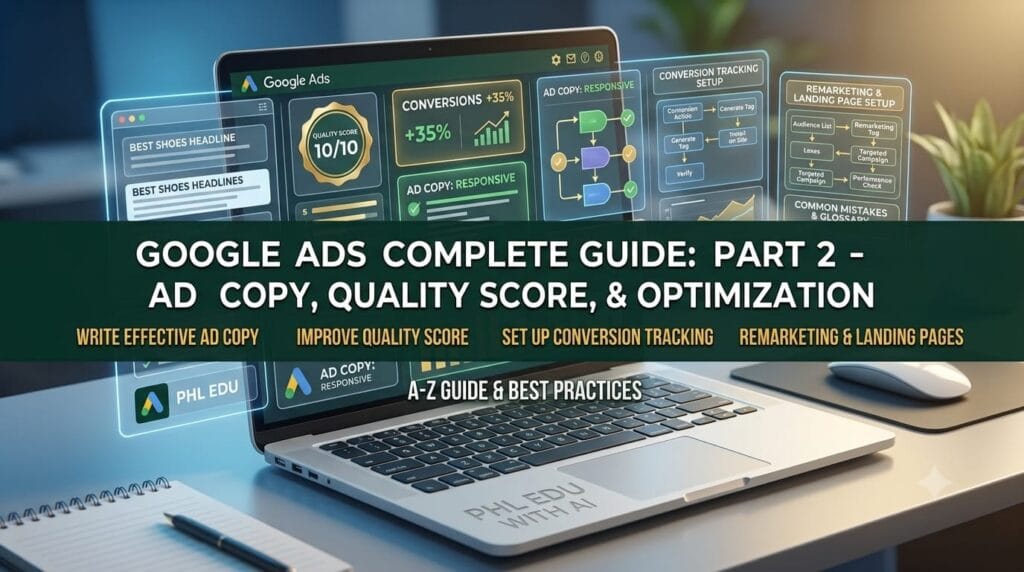
Google Ads مکمل گائیڈ اردو میں – حصہ دوم: ایڈ کاپی، Quality Score، کنورژن ٹریکنگ اور آپٹیمائزیشن
یہ Google Ads گائیڈ کا حصہ دوم ہے۔ اگر آپ نے حصہ اول نہیں پڑھا جس میں Google Ads کیا ہے، اکاؤنٹ سیٹ اپ، کیمپین ٹائپس اور کی ورڈز کی تفصیل ہے، تو پہلے وہ ضرور دیکھ لیں۔ اس حصے میں ہم اثر انگیز ایڈ کاپی لکھنے، Quality Score کی گہرائی، کنورژن ٹریکنگ، ری مارکیٹنگ، اہم Metrics اور عام غلطیوں کی مکمل تشریح کریں گے۔
آج کل زیادہ تر Search Ads، Responsive Search Ads (RSA) کی شکل میں چلتے ہیں، جس میں آپ زیادہ سے زیادہ 15 Headlines اور 4 Descriptions فراہم کرتے ہیں، اور گوگل کی AI خودکار طور پر ان کے مختلف امتزاج (Combinations) بنا کر بہترین کارکردگی والا ورژن ہر صارف کو دکھاتی ہے۔
کم از کم 3 Headlines میں اصل Keyword شامل کریں — اس سے مطابقت (Relevance) بڑھتی ہے۔
واضح Call-to-Action دیں — جیسے “ابھی آرڈر کریں”، “مفت Quote حاصل کریں”، “آج ہی رابطہ کریں”۔
عدد اور مخصوص تفصیل شامل کریں — “50% تک رعایت”، “24 گھنٹے میں ڈیلیوری” جیسی Specific باتیں عمومی الفاظ سے زیادہ Click حاصل کرتی ہیں۔
ہر Headline مختلف زاویہ دکھائے — کچھ میں Price، کچھ میں Quality، کچھ میں Urgency اور کچھ میں Trust پر زور دیں۔
Headlines کی مثال:
“لاہور میں بہترین جوتے | 50% رعایت آج صرف” | “مفت ڈیلیوری، آسان ریٹرن پالیسی” | “5000+ خوش گاہک — ابھی آرڈر کریں”
Ad Extensions/Assets کیوں ضروری ہیں؟
Ad Assets (پہلے Extensions کہلاتے تھے) آپ کے اشتہار میں اضافی معلومات جوڑتے ہیں — جیسے Sitelinks (اضافی صفحات کے لنکس)، Call Asset (فون نمبر پر براہِ راست Call کا بٹن)، Location Asset (نقشے پر پتہ)، اور Structured Snippets (خصوصیات کی مختصر فہرست)۔ یہ آپ کے اشتہار کا سائز بڑا کرتے ہیں، زیادہ جگہ گھیرتے ہیں، اور Ad Rank میں بھی مثبت کردار ادا کرتے ہیں — اس لیے ہر کیمپین میں جتنے متعلقہ Assets ہو سکیں شامل کریں۔
Quality Score کی گہرائی سے تفصیل
Quality Score تین اہم عناصر پر مبنی ہوتا ہے:
Expected Click-Through Rate (CTR) — گوگل کا اندازہ کہ آپ کا اشتہار کتنے Click حاصل کرے گا اسی پوزیشن پر موازنہ کرتے ہوئے۔
Ad Relevance — آپ کا اشتہار Keyword سے کتنا مطابقت رکھتا ہے۔
Landing Page Experience — آپ کا Landing Page کتنا متعلقہ، تیز اور صارف دوست (Mobile-Friendly) ہے۔
ان تینوں کو بہتر بنانے کا سب سے آسان طریقہ یہ ہے کہ Ad Group میں صرف قریبی متعلقہ Keywords رکھیں، ہر Ad میں وہی Keyword شامل کریں، اور Landing Page پر بھی وہی موضوع نمایاں دکھائیں جو اشتہار میں وعدہ کیا گیا ہے — اسے Message Match کہا جاتا ہے۔
کنورژن ٹریکنگ سیٹ اپ کرنا
Conversion Tracking کے بغیر Google Ads چلانا ایسا ہے جیسے آنکھیں بند کر کے گاڑی چلانا — آپ کو معلوم ہی نہیں ہوگا کہ کون سا Keyword یا Ad واقعی سیل یا Lead لا رہا ہے۔ اسے سیٹ اپ کرنے کے مراحل:
Google Ads اکاؤنٹ میں “Goals” یا “Conversions” سیکشن میں جائیں اور نیا Conversion Action بنائیں (مثلاً “Purchase” یا “Form Submission”)۔
Google Tag (یا پہلے سے موجود Google Analytics 4 سے Link) اپنی Website میں انسٹال کریں۔
اگر Purchase ٹریک کرنا ہے تو Value (رقم) بھی ٹریک کریں تاکہ ROAS کا حساب لگایا جا سکے۔
Google Tag Assistant یا Google Ads میں “Diagnostics” کے ذریعے تصدیق کریں کہ Conversion صحیح طریقے سے Fire ہو رہا ہے۔
اہم نوٹ:
جب تک Conversion Tracking درست کام نہ کر رہا ہو، Target CPA یا Target ROAS جیسی Automated Bidding Strategies استعمال نہ کریں — کیونکہ گوگل کی AI غلط ڈیٹا پر غلط فیصلے کرے گی۔
Landing Page کو بہتر بنانا
دنیا کا بہترین اشتہار بھی ضائع ہو جاتا ہے اگر Landing Page کمزور ہو۔ ایک اچھے Landing Page میں یہ باتیں ضروری ہیں:
Mobile پر تیزی سے کھلے (3 سیکنڈ سے کم Loading Time بہترین ہے)۔
اشتہار میں جو وعدہ کیا گیا، وہی صفحے پر واضح طور پر نظر آئے (Message Match)۔
واحد اور واضح Call-to-Action ہو — بہت زیادہ Options سے صارف الجھ جاتا ہے۔
Trust Signals شامل ہوں — گاہکوں کے Reviews، Certifications، یا Secure Payment کے نشانات۔
Contact Form مختصر ہو — جتنے کم Fields ہوں گے، اتنی زیادہ Conversion Rate بہتر ہوگی۔
ری مارکیٹنگ (Remarketing) کیا ہے؟
Remarketing کا مطلب ہے ان لوگوں کو دوبارہ اشتہار دکھانا جو پہلے آپ کی Website پر آ چکے ہیں لیکن خریداری کیے بغیر چلے گئے۔ چونکہ یہ لوگ پہلے سے آپ کے Brand سے واقف ہیں، اس لیے Remarketing عام طور پر نئے Traffic کی نسبت کہیں زیادہ Cost-Effective اور بہتر Conversion Rate دیتا ہے۔
اسے سیٹ اپ کرنے کے لیے اپنی Website پر Google Tag لگانا ضروری ہے، جو Visitors کی ایک “Audience List” بناتا ہے۔ اس کے بعد آپ اس List کو Display یا Video Campaign میں Target کر سکتے ہیں — مثلاً وہ لوگ جنہوں نے Cart میں چیز ڈالی مگر خریدی نہیں۔
اہم Metrics جن پر نظر رکھنی چاہیے
Metric
مطلب اور اہمیت
CTR (Click-Through Rate)
کتنے لوگوں نے دیکھنے کے بعد Click کیا — زیادہ CTR بہتر Quality Score کی نشانی ہے۔
CPC (Cost Per Click)
ہر Click کی اوسط قیمت — Competition اور Quality Score دونوں اس پر اثر انداز ہوتے ہیں۔
CPA (Cost Per Acquisition)
ایک Conversion (سیل/Lead) حاصل کرنے کی اوسط لاگت۔
Conversion Rate
کتنے فیصد Clicks اصل Conversion میں تبدیل ہوئے — Landing Page کی کارکردگی کا اہم اشارہ۔
ROAS (Return on Ad Spend)
ہر خرچ کیے گئے روپے کے بدلے کتنی آمدنی آئی — E-commerce کے لیے سب سے اہم Metric۔
Impression Share
آپ کا اشتہار اہل Auctions میں سے کتنے فیصد میں واقعی نظر آیا — اگر کم ہو تو بجٹ یا Bid بڑھانے کی ضرورت ہو سکتی ہے۔
شروعات کرنے والوں کی عام غلطیاں
Conversion Tracking سیٹ اپ نہ کرنا — بغیر ڈیٹا کے کوئی بھی فیصلہ محض اندازہ ہوتا ہے۔
بہت زیادہ Broad Keywords استعمال کرنا — اس سے غیر متعلقہ Traffic آتا ہے اور بجٹ ضائع ہوتا ہے۔
Negative Keywords نظر انداز کرنا — Search Terms Report کبھی نہ دیکھنا مہنگا پڑتا ہے۔
کیمپین کو بہت جلد بند یا تبدیل کرنا — Google کی AI کو سیکھنے کے لیے کم از کم 1 سے 2 ہفتے کا وقت دیں، ہر روز تبدیلیاں نہ کریں۔
کمزور Landing Page پر بہترین اشتہار چلانا — Ad اور Landing Page دونوں کو ساتھ بہتر بنائیں۔
صرف ایک Ad چلانا — ہر Ad Group میں کم از کم 2-3 مختلف Ad Variations رکھیں تاکہ موازنہ کر کے بہترین والا منتخب کیا جا سکے۔
Google Ads اصطلاحات — الف سے ی تک (Glossary)
نیچے وہ اہم اصطلاحات دی گئی ہیں جو Google Ads میں بار بار استعمال ہوتی ہیں، تاکہ آپ کسی بھی وقت واپس آ کر رجوع کر سکیں:
Ad Rank
وہ اسکور جو یہ طے کرتا ہے کہ آپ کا اشتہار Auction میں کس پوزیشن پر آئے گا (Bid × Quality Score پر مبنی)۔
Ad Group
کیمپین کے اندر متعلقہ Keywords اور Ads کا چھوٹا مجموعہ۔
Bid
وہ زیادہ سے زیادہ رقم جو آپ ایک Click یا Conversion کے لیے دینے کو تیار ہیں۔
Broad Match
سب سے وسیع Keyword Match Type، ملتے جلتے Searches پر بھی چلتا ہے۔
Conversion
وہ مطلوبہ Action جو صارف Website پر کرتا ہے، جیسے خریداری یا فارم جمع کروانا۔
CPA (Cost Per Acquisition)
ایک Conversion حاصل کرنے کی اوسط لاگت۔
CPC (Cost Per Click)
ہر Click کی قیمت۔
CTR (Click-Through Rate)
دیکھنے والوں میں سے Click کرنے والوں کا تناسب۔
Display Network
لاکھوں ویب سائٹس/ایپس کا نیٹ ورک جہاں Display Ads نظر آ سکتے ہیں۔
Exact Match
سب سے محدود Match Type، صرف عین وہی یا ہم معنی Search پر چلتا ہے۔
Impression
ایک بار جب آپ کا اشتہار کسی کو دکھایا جائے، چاہے Click ہو یا نہ ہو۔
Impression Share
اہل Auctions میں سے آپ کا اشتہار کتنے فیصد دفعہ نظر آیا۔
Keyword
وہ لفظ یا جملہ جس پر آپ کا اشتہار Trigger ہو۔
Landing Page
وہ صفحہ جہاں صارف اشتہار پر Click کرنے کے بعد پہنچتا ہے۔
Negative Keyword
وہ لفظ جسے آپ اپنے اشتہار کو دکھانے سے روکنے کے لیے استعمال کرتے ہیں۔
Performance Max
گوگل کی AI پر مبنی کیمپین جو تمام Placements پر بیک وقت چلتی ہے۔
Phrase Match
وہ Match Type جو مخصوص جملے یا اس سے قریبی Variations پر چلتا ہے۔
Quality Score
1 سے 10 کا اسکور جو Ad، Keyword اور Landing Page کی مطابقت پر مبنی ہوتا ہے۔
Remarketing
پہلے آنے والے Visitors کو دوبارہ Target کرنا۔
ROAS (Return on Ad Spend)
ہر خرچ شدہ روپے کے بدلے حاصل شدہ آمدنی۔
Search Term
وہ اصل الفاظ جو صارف نے Google میں ٹائپ کیے۔
یہ گائیڈ کا حصہ دوم مکمل ہوا۔ اگر آپ نے حصہ اول نہیں پڑھا (Google Ads کیا ہے، اکاؤنٹ سیٹ اپ، کیمپین ٹائپس اور کی ورڈز)، تو یہاں پڑھیں۔
PHL EDU WITH AI: Empowering your future with free education, AI tools, LMS, and digital skill solutions.
اکثر پوچھے گئے سوالات
Responsive Search Ads میں کتنی Headlines لکھنی چاہئیں؟
گوگل زیادہ سے زیادہ 15 Headlines کی اجازت دیتا ہے۔ بہترین نتائج کے لیے کم از کم 8 سے 10 مختلف Headlines لکھیں تاکہ گوگل کی AI کے پاس Test کرنے کے لیے کافی Options ہوں۔
Conversion Tracking کے بغیر Automated Bidding استعمال کر سکتے ہیں؟
نہیں، یہ تجویز نہیں کیا جاتا۔ Target CPA یا Target ROAS جیسی حکمتِ عملیاں درست Conversion ڈیٹا کے بغیر غلط فیصلے کر سکتی ہیں۔
Remarketing عام کیمپین سے زیادہ مؤثر کیوں ہوتا ہے؟
کیونکہ Remarketing میں آپ ان لوگوں کو ٹارگٹ کرتے ہیں جو پہلے سے آپ کے Brand سے واقف ہیں، اس لیے Conversion Rate عام طور پر زیادہ ہوتی ہے۔
ایک نئی کیمپین کو کتنے دن چلانے کے بعد بند یا تبدیل کرنا چاہیے؟
عام طور پر کم از کم 1 سے 2 ہفتے کا وقت دیں تاکہ گوگل کی AI کو Data Collect کرنے اور Optimize ہونے کا موقع ملے، پھر نتائج کی بنیاد پر فیصلہ کریں۔
Quality Score کیسے چیک کر سکتے ہیں؟
Google Ads اکاؤنٹ میں Keywords کے Column Settings میں جا کر “Quality Score” کالم شامل کریں — یہ ہر Keyword کے سامنے 1 سے 10 کا اسکور دکھا دے گا۔
Landing Page کو بہتر بنانے کا سب سے آسان طریقہ کیا ہے؟
یقینی بنائیں کہ صفحہ Mobile پر تیزی سے کھلے اور اشتہار میں کیا گیا وعدہ صفحے پر واضح طور پر پورا ہوتا نظر آئے (Message Match)۔
Ad Extensions/Assets کیا واقعی فرق ڈالتے ہیں؟
جی ہاں، یہ اشتہار کا سائز بڑھاتے ہیں، اضافی معلومات دیتے ہیں، اور Ad Rank پر بھی مثبت اثر ڈالتے ہیں — انہیں ہر کیمپین میں شامل کرنا چاہیے۔
PHL EDU Eco System
Access more free Online AI & Web Tools by PHL EDU WITH AI:
Google Ads Complete Guide – Part 2: Ad Copy, Quality Score, Conversion Tracking & Optimization
This is Part 2 of the Google Ads guide. If you haven’t read Part 1 — covering what Google Ads is, account setup, campaign types, and keywords — check that out first. This part covers writing high-converting ad copy, a deep dive into Quality Score, conversion tracking, remarketing, key metrics, and common mistakes.
Most Search Ads today run as Responsive Search Ads (RSAs), where you provide up to 15 headlines and 4 descriptions, and Google’s AI automatically tests different combinations to show each user the best-performing version.
Include your core keyword in at least 3 headlines — this boosts relevance.
Give a clear call-to-action — like “Order Now,” “Get a Free Quote,” or “Contact Us Today.”
Use numbers and specific details — “Up to 50% off” or “Delivered in 24 hours” outperform vague, generic wording.
Cover different angles across headlines — some focused on price, some on quality, some on urgency, some on trust.
Example headlines:
“Best Shoes in Lahore | 50% Off Today Only” | “Free Delivery, Easy Returns” | “5,000+ Happy Customers — Order Now”
Why Ad Extensions/Assets Matter
Ad Assets (formerly called Extensions) add extra information to your ad — such as Sitelinks (links to extra pages), a Call Asset (a click-to-call button), a Location Asset (a map/address), and Structured Snippets (a quick feature list). These make your ad larger, take up more space, and can even positively influence your Ad Rank — so include as many relevant assets as possible in every campaign.
Quality Score in Depth
Quality Score is based on three key factors:
Expected Click-Through Rate (CTR) — Google’s estimate of how likely your ad is to be clicked, compared to competitors in the same position.
Ad Relevance — how closely your ad matches the intent behind the keyword.
Landing Page Experience — how relevant, fast, and mobile-friendly your landing page is.
The simplest way to improve all three is to keep each ad group tightly themed, include the same keyword in your ad text, and make sure your landing page clearly delivers on exactly what the ad promised — this is called message match.
Setting Up Conversion Tracking
Running Google Ads without conversion tracking is like driving with your eyes closed — you won’t know which keyword or ad is actually generating sales or leads. Here’s how to set it up:
In your Google Ads account, go to “Goals” or “Conversions” and create a new conversion action (e.g., “Purchase” or “Form Submission”).
Install the Google Tag on your website (or link an existing Google Analytics 4 property).
If tracking purchases, also track the value so you can calculate ROAS accurately.
Verify the conversion is firing correctly using Google Tag Assistant or the “Diagnostics” section in Google Ads.
Important:
Don’t use automated bidding strategies like Target CPA or Target ROAS until conversion tracking is working correctly — Google’s AI will make poor decisions if it’s optimizing against bad data.
Improving Your Landing Page
Even the best ad in the world is wasted on a weak landing page. A good landing page needs:
Fast mobile loading (under 3 seconds is ideal).
A clear match between what the ad promised and what the page delivers (message match).
One clear, single call-to-action — too many options tend to confuse and lose visitors.
Trust signals — customer reviews, certifications, or secure payment badges.
A short contact form — fewer fields generally means a higher conversion rate.
What Is Remarketing?
Remarketing means showing ads again to people who’ve already visited your website but left without converting. Since these people already know your brand, remarketing is usually far more cost-effective and converts better than reaching brand-new traffic.
To set it up, you need the Google Tag installed on your site, which builds an “audience list” of visitors. You can then target that list in a Display or Video campaign — for example, people who added an item to their cart but didn’t purchase.
Key Metrics You Should Monitor
Metric
What it means & why it matters
CTR (Click-Through Rate)
The percentage of people who clicked after seeing your ad — a higher CTR signals a stronger Quality Score.
CPC (Cost Per Click)
The average cost per click — influenced by both competition and Quality Score.
CPA (Cost Per Acquisition)
The average cost to get one conversion (sale/lead).
Conversion Rate
The percentage of clicks that turned into actual conversions — a key indicator of landing page performance.
ROAS (Return on Ad Spend)
Revenue earned per rupee spent on ads — the most important metric for e-commerce.
Impression Share
The percentage of eligible auctions your ad actually appeared in — if low, you may need a higher budget or bid.
Common Mistakes Beginners Make
Not setting up conversion tracking — without data, every decision is just a guess.
Using overly broad keywords — this brings irrelevant traffic and wastes budget.
Ignoring negative keywords — never checking your Search Terms Report is an expensive habit.
Pausing or changing campaigns too soon — give Google’s AI at least 1–2 weeks to learn before making daily changes.
Running a great ad to a weak landing page — improve both together, not just one.
Running only one ad — keep at least 2–3 ad variations per ad group so you can compare and pick the best performer.
Google Ads Glossary — A to Z
Below are the key terms you’ll encounter repeatedly in Google Ads, so you can come back and reference them anytime:
Ad Rank
The score that determines your ad’s position in the auction (based on Bid × Quality Score).
Ad Group
A smaller collection of related keywords and ads within a campaign.
Bid
The maximum amount you’re willing to pay for a click or conversion.
Broad Match
The widest keyword match type, which can also trigger on related searches.
Conversion
A desired action a user takes on your site, like a purchase or form submission.
CPA (Cost Per Acquisition)
The average cost of acquiring one conversion.
CPC (Cost Per Click)
The price paid per click.
CTR (Click-Through Rate)
The ratio of clicks to impressions.
Display Network
The network of millions of websites/apps where Display Ads can appear.
Exact Match
The most restrictive match type, triggering only on that exact or very close-meaning search.
Impression
One instance of your ad being shown, regardless of whether it was clicked.
Impression Share
The percentage of eligible auctions where your ad actually appeared.
Keyword
The word or phrase that triggers your ad to show.
Landing Page
The page a user lands on after clicking your ad.
Negative Keyword
A term used to prevent your ad from showing for specific searches.
Performance Max
Google’s AI-driven campaign type that runs across all placements simultaneously.
Phrase Match
A match type that triggers on a specific phrase or close variations of it.
Quality Score
A 1–10 rating based on the relevance of your ad, keyword, and landing page.
Remarketing
Re-targeting people who’ve previously visited your site.
ROAS (Return on Ad Spend)
Revenue earned per rupee spent on advertising.
Search Term
The actual words a user typed into Google.
That wraps up Part 2. If you haven’t read Part 1 (what Google Ads is, account setup, campaign types, and keywords), read it here.